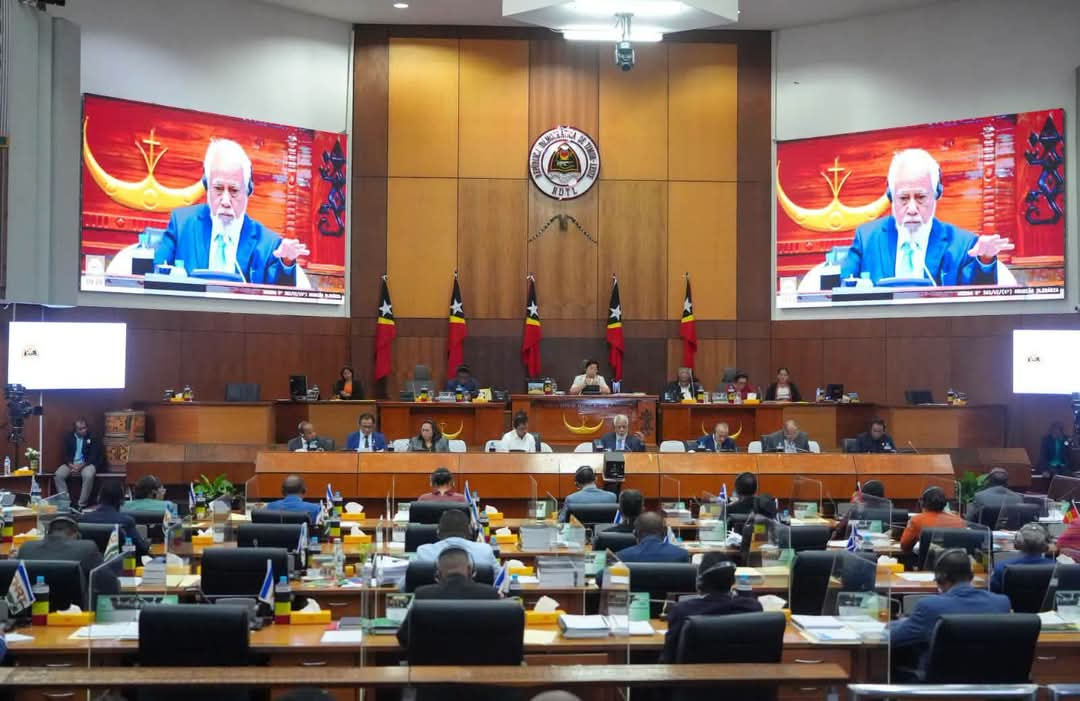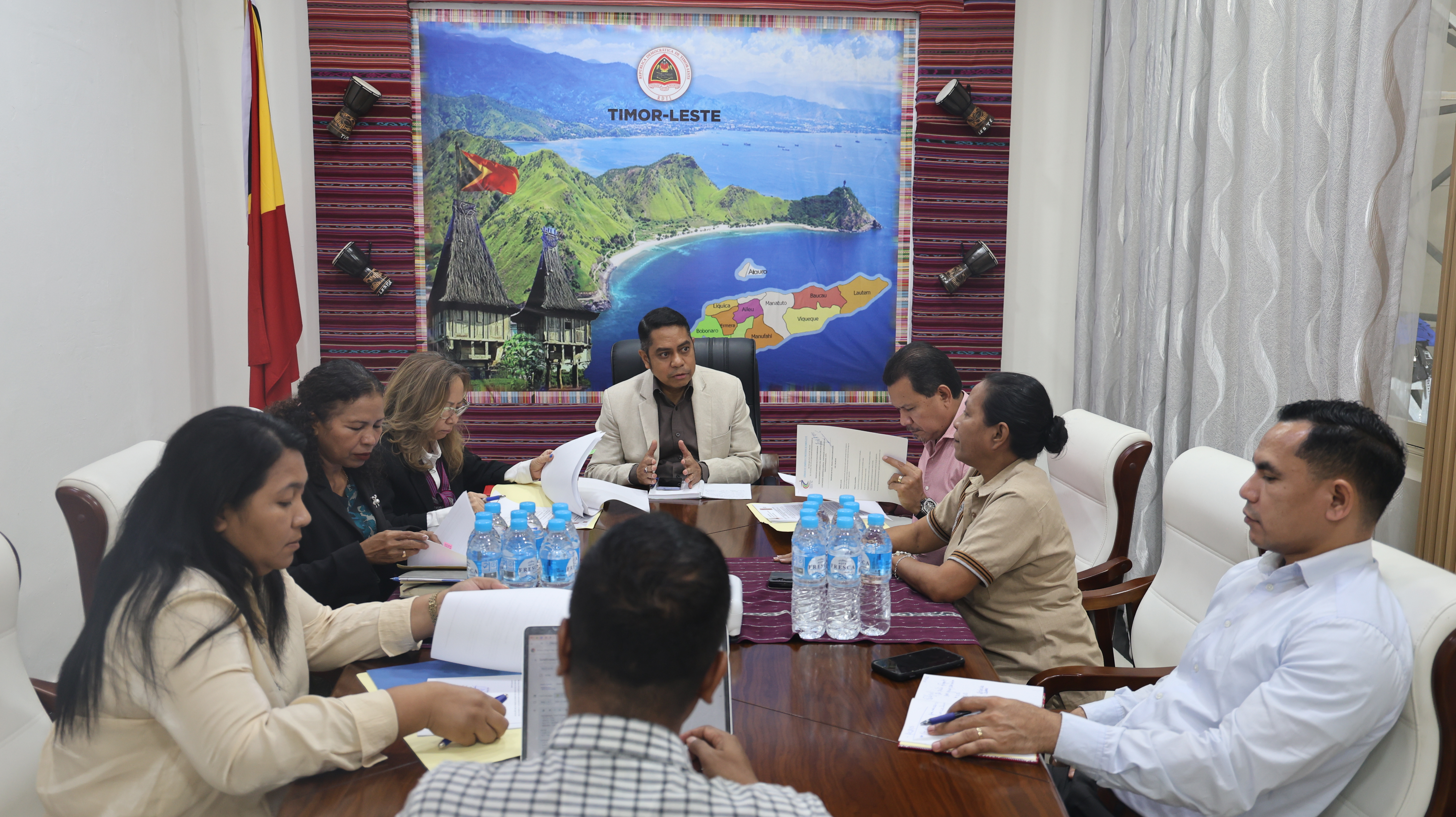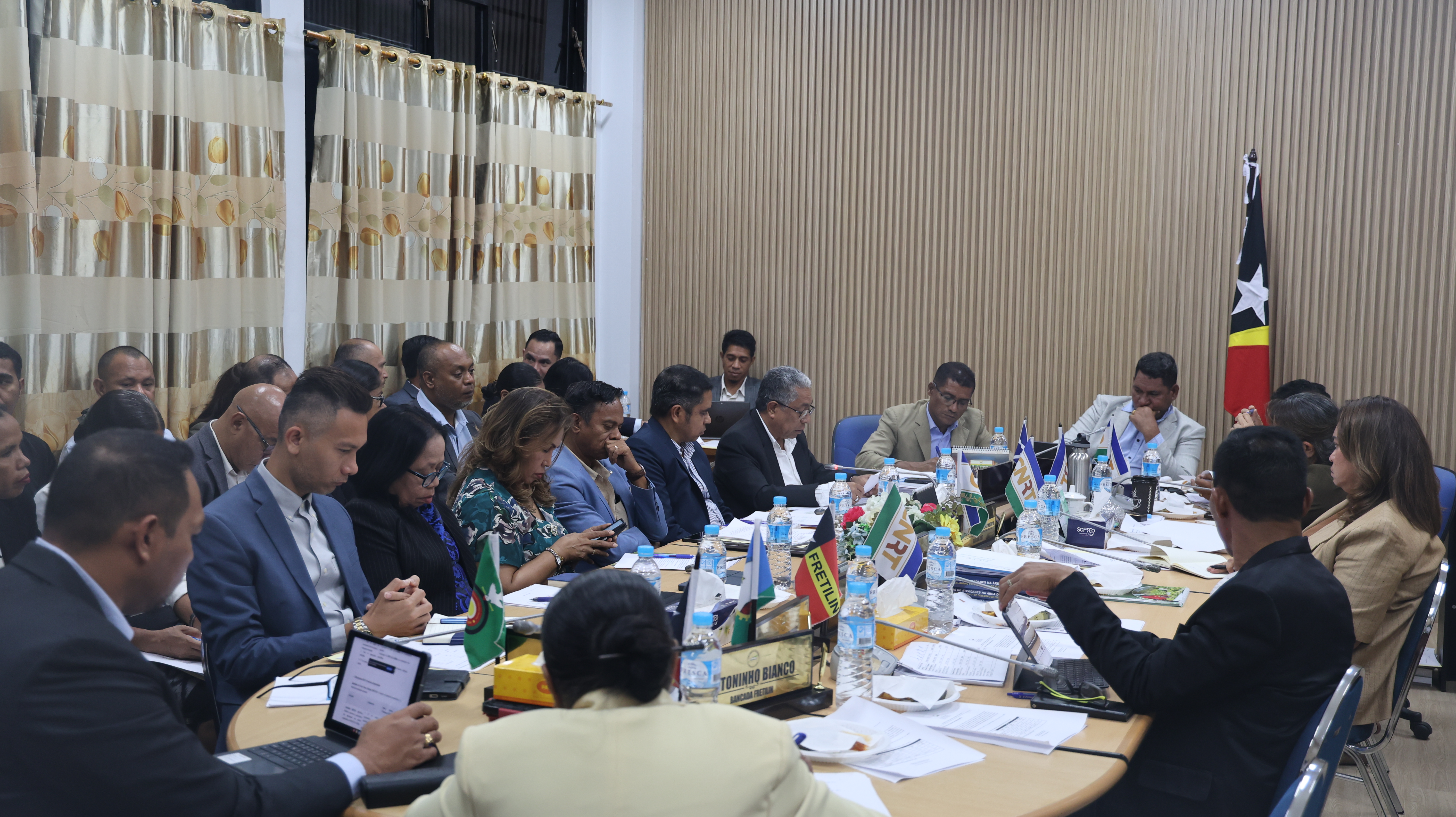
The Vice- Prime Minister, Coordinating Minister for Economic Affairs (MKAÉ), and Minister of Tourism and Environment (MTA), Francisco Kalbuadi Lay, took part in the detailed discussion and vote on Draft Law No. 33/IV (4th) on the 2027 General State Budget (OJE).
November, 25 - 2026
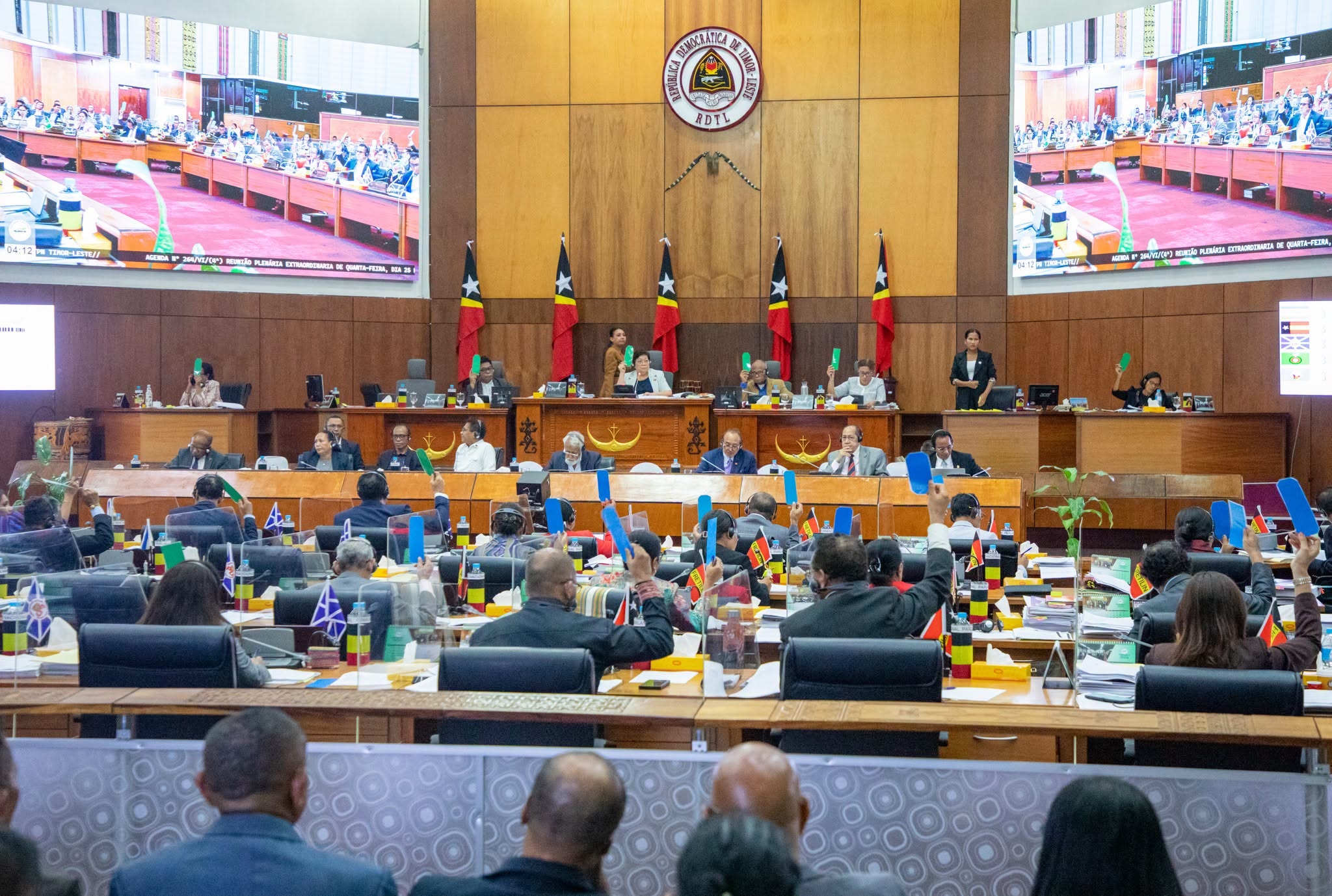
The Vice- Prime Minister, Coordinating Minister for Economic Affairs (MKAÉ), and Minister of Tourism and Environment (MTA), Francisco Kalbuadi Lay, took part in the detailed discussion and vote on Draft Law No. 33/IV (4th) on the 2027 General State Budget (OJE), held at the National Parliament (PN) on Wednesday, 25 November 2026.
The budget allocation for the Deputy Prime Minister and MKAÉ was approved in the detailed vote, with 43 votes in favour, none against, and 21 abstentions.
The detailed discussion and vote were chaired by the President of the National Parliament, Maria Fernanda Lay. This stage of the legislative process allows Members of Parliament and Government members to examine and assess the provisions of the draft law, ensuring that its contents address national needs and interests.
The vote was conducted using a block-voting system covering budget allocations for the Prime Minister, Vice- Prime Ministers for Economic Affairs and Social Affairs; the Presidency of the Council of Ministers; the Secretary of State for Equality; the Secretary of State for Social Communication; and the Coordinating Ministers for Economic Affairs and Social Affairs.
According to the proposed budget, the Deputy Prime Minister has a total allocation of US$506,320, distributed among expenditure categories as follows: Salaries and Wages: US$262,231; Goods and Services: US$244,089; Public Transfers: US$0; Minor Capital: US$0; and Development Capital: US$0.
Accordingly, the total budget allocation of US$506,320 for the Vice- Prime Minister and MKAÉ is allocated to salaries and wages, as well as goods and services, to support operations and the fulfilment of institutional duties during the 2027 fiscal year.
The Vice-Prime Minister Responds to Members’ Questions and Concerns
The Vice- Prime Minister, Coordinating Minister for Economic Affairs, and Minister of Tourism and Environment, Francisco Kalbuadi Lay, responded to Members’ questions and concerns, explaining the Government’s programmes, actions, and priorities, including its efforts to strengthen national economic development.
1. Coordination with Oversight Institutions and National Dialogue
The Vice-Prime Minister stated that MKAÉ continues to work with the institutions under its oversight to ensure effective coordination and implementation of economic policy.
MKAÉ also continues to promote coordination and dialogue with stakeholders throughout the country, from Lospalos to Oe-Cusse, to hear their concerns, identify opportunities, and strengthen cooperation for local economic development.
2. Support for the Private Sector and Institutional Management Reform
The Deputy Prime Minister emphasized that the Government continues to support the private sector through measures and initiatives that can stimulate investment, increase productivity, and create economic opportunities.
In terms of institutional management, MKAÉ continues to improve human-resource management, regularize and formalize employment contracts, upgrade its digital portal, and develop information systems. These measures are important for strengthening institutional capacity and ensuring the effective implementation of public policy.
3. Legislative Reform and the Minimum Wage
The Deputy Prime Minister also referred to legislative reforms already approved by the National Parliament as part of efforts to improve the legal and regulatory framework in the economic sector.
In addition, MKAÉ continues to review and consider the proposed Minimum Wage Law, an important subject in discussions about labour policy and economic development.
4. MKAÉ’s Priorities for 2027–2030
The Deputy Prime Minister explained that MKAÉ’s priorities for 2027–2030 will focus on coordinating economic policy, particularly preparing Timor-Leste to fulfil its responsibilities as ASEAN Chair in 2029.
These priorities include strengthening national economic-policy coordination; preparing for and implementing international commitments; participating in negotiations, technical meetings, and international forums; strengthening cooperation within the World Trade Organization (WTO); and preparing relevant institutions and sectors for the 2029 ASEAN Chairmanship.
5. Construction of the International Convention Centre (ICC) and Economic Diversification
The Deputy Prime Minister also discussed the construction of the International Convention Centre (ICC), describing it as strategic infrastructure that will not only support Timor-Leste’s preparations for the 2029 ASEAN Chairmanship, but also promote investment, develop the private sector, and diversify the national economy.
This initiative is linked to the Government’s goal of continuing legislative and regulatory reforms, strengthening institutional management, and creating a favourable environment for business and investment.
6. The Potential of the Blue Economy and Maritime Resources
Regarding the blue economy, the Deputy Prime Minister highlighted Timor-Leste’s significant potential in its maritime resources. He explained that 1,500 fish species have been identified in the Timor Sea, including nearly 200 new species, demonstrating the richness of its marine biodiversity.
This potential offers opportunities to develop the blue economy, particularly in fisheries, scientific research, marine-resource conservation, and business opportunities for coastal communities.
demonstrating the significance of its marine biodiversity.
The Deputy Prime Minister added that maritime resources must be managed responsibly to ensure environmental sustainability and generate economic benefits for present and future generations.