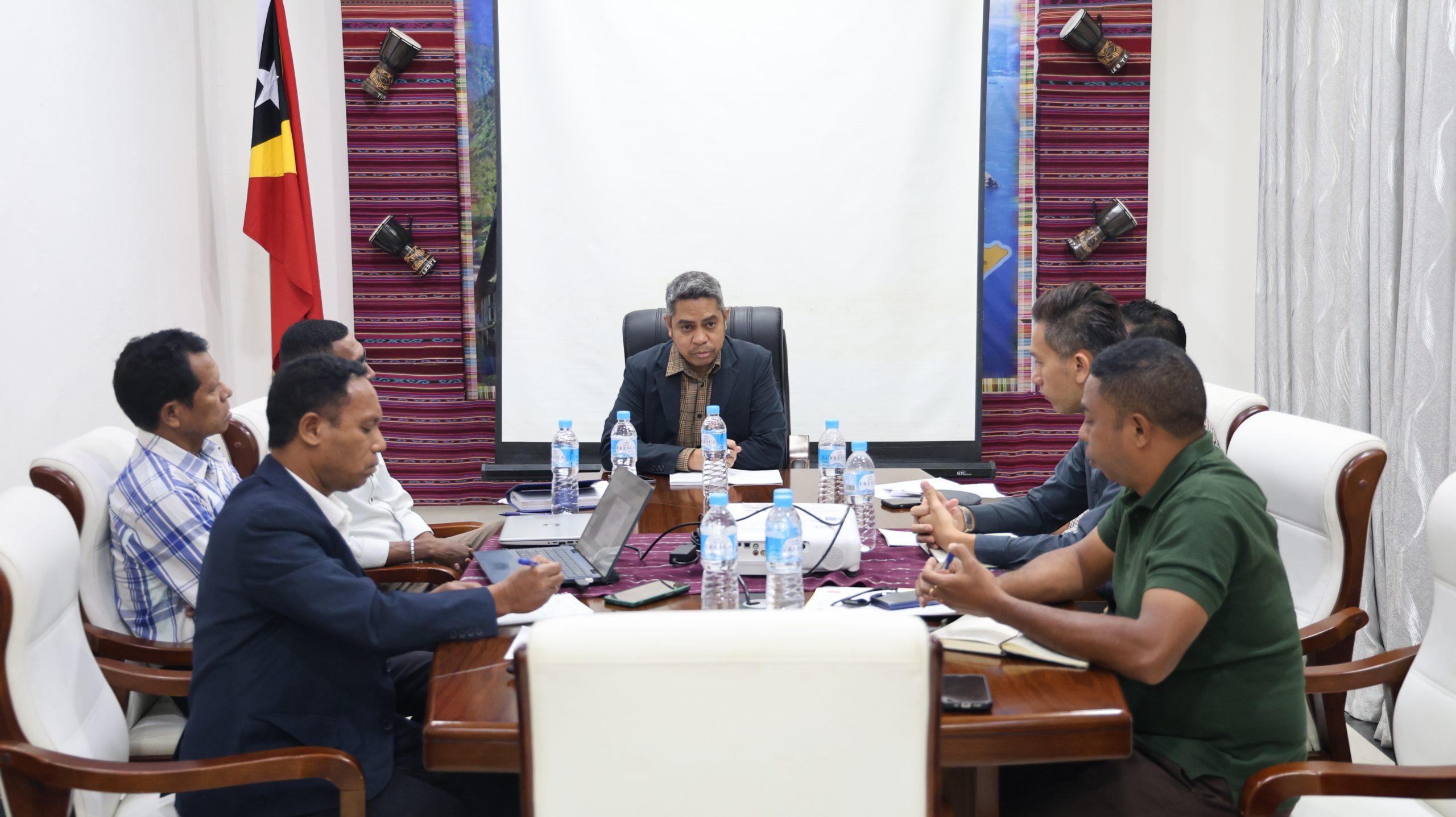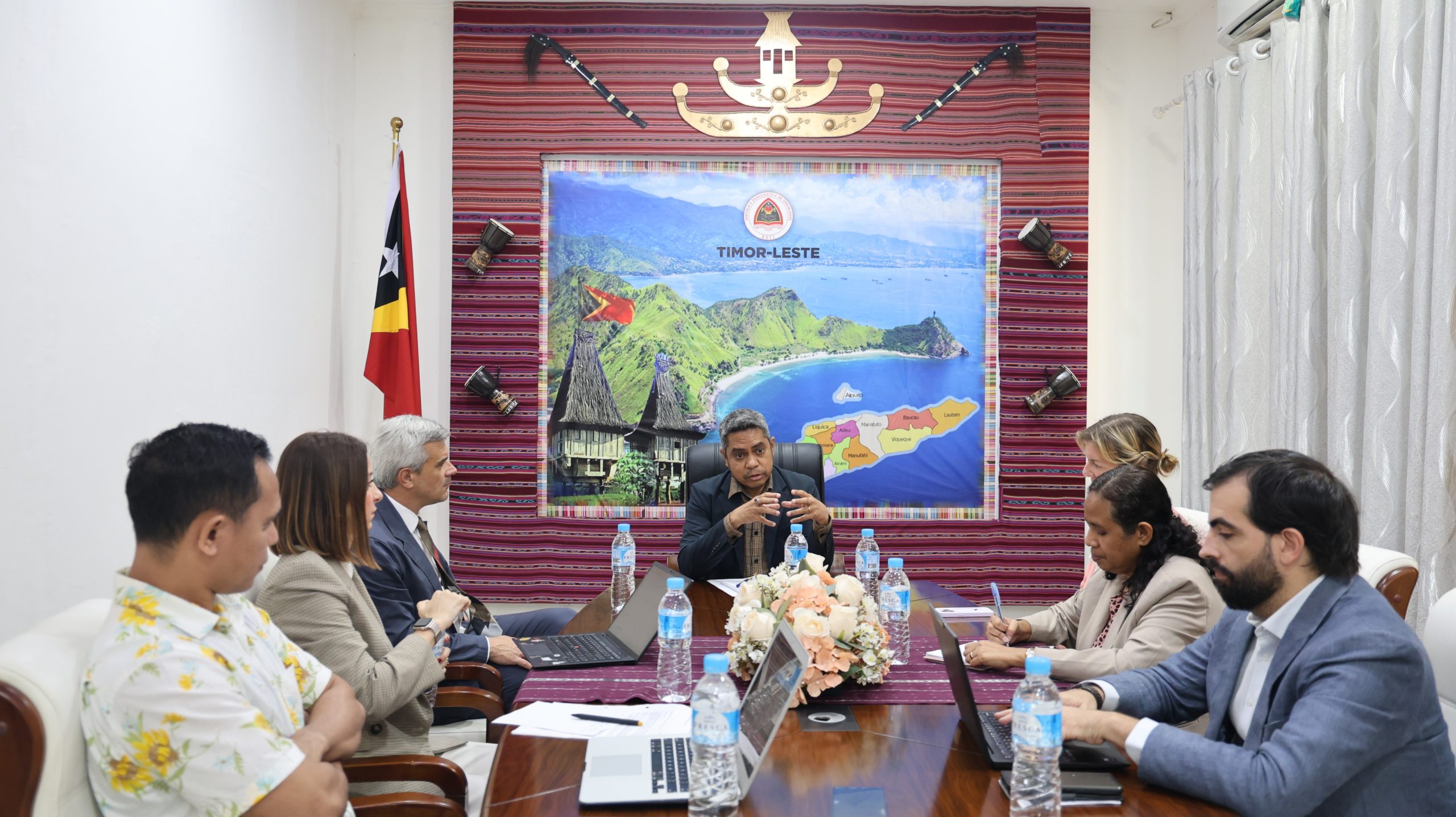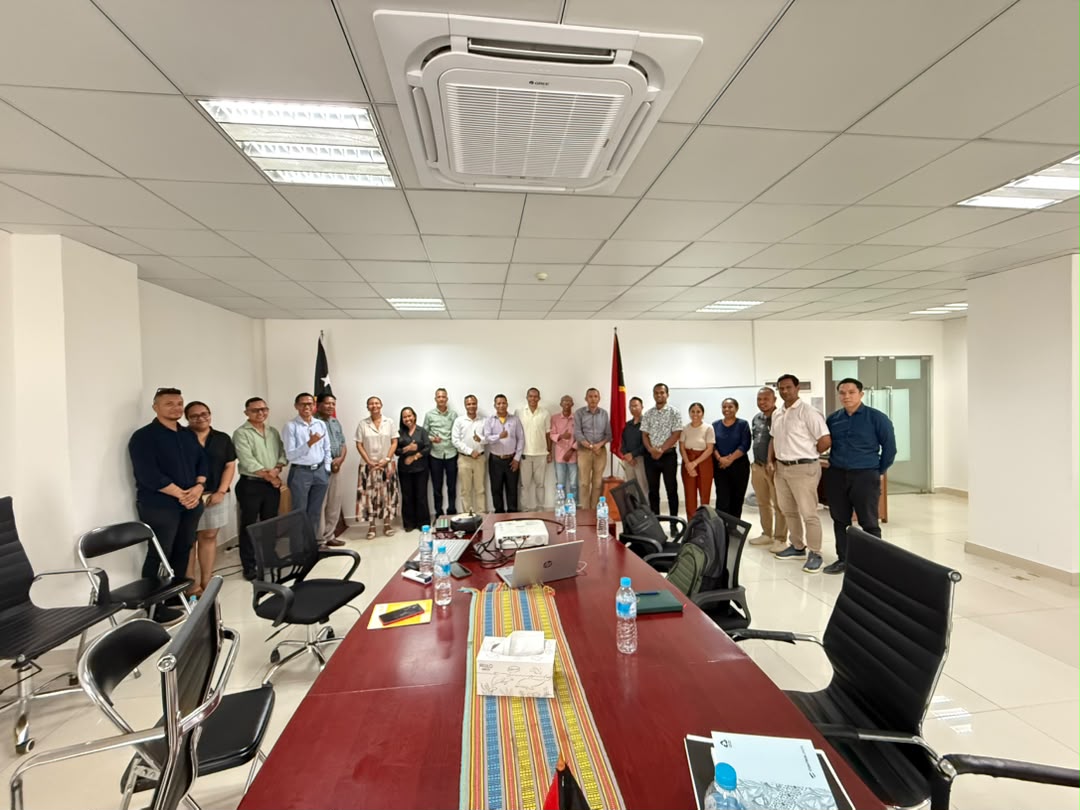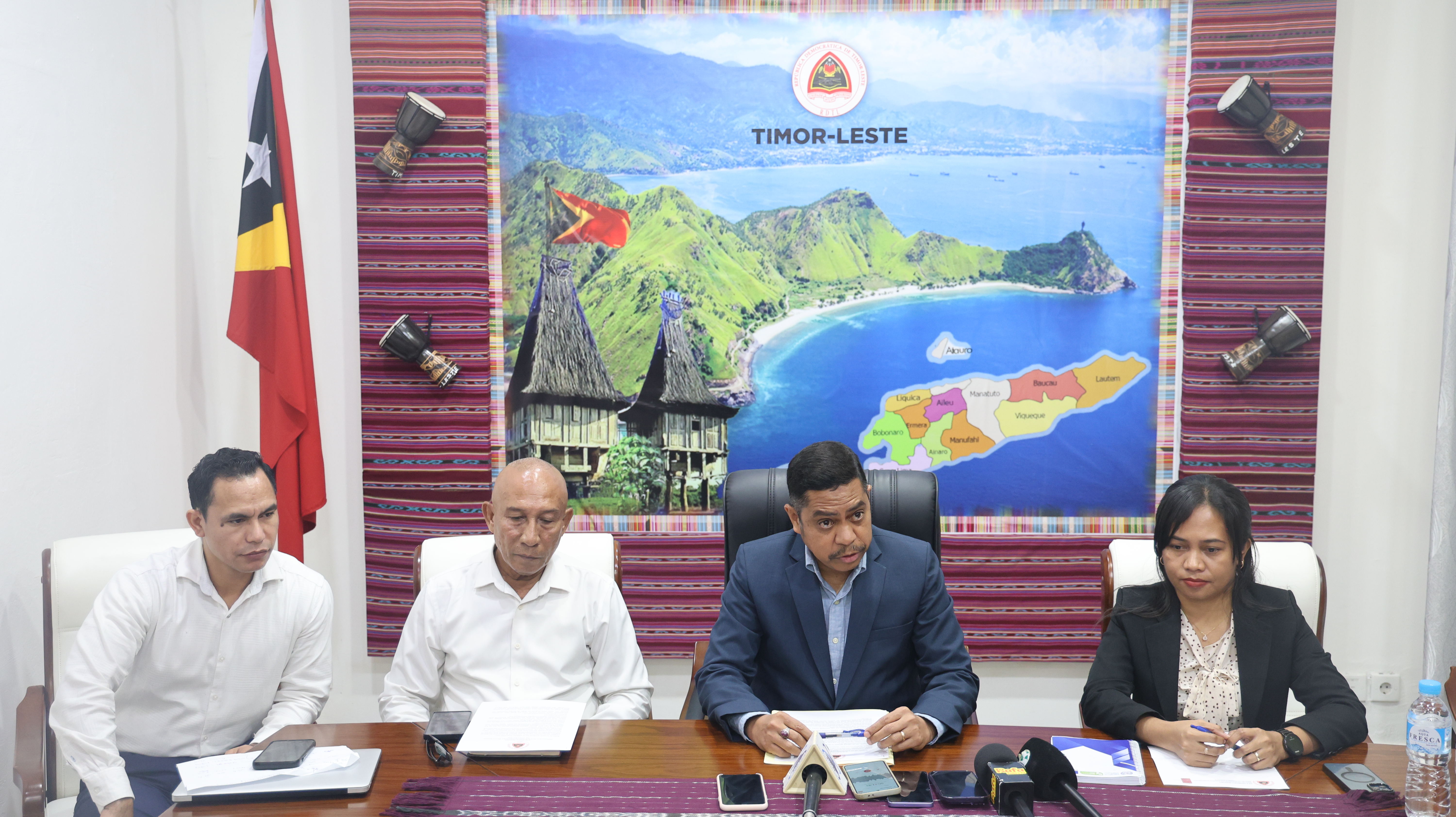
DILI, 12 October 2026 — The Office of the Coordinating Minister for Economic Affairs (MKAE), through its General Coordinator, Mr Jorge Rui de Carvalho Martins, held a press conference at the MKAE Meeting Room in the Government Palace to clarify the institution’s official position on the proposed revision of Timor-Leste’s national minimum wage.
During the press conference, the General Coordinator outlined the analytical process and preparations undertaken in drafting the proposed legislation to increase the national minimum wage from US$115 to US$160 per month. He also addressed public concerns and allegations that MKAE had obstructed the submission of the proposal to the Council of Ministers.
At the outset of the press conference, the MKAE General Coordinator expressed his appreciation to journalists, representatives of the media, and members of the public attending the event. He used the opportunity to articulate MKAE’s institutional position clearly and transparently.
MKAE Has No Interest in Obstructing the Minimum Wage Increase
MKAE emphasized that the institution has no interest in preventing an increase in the national minimum wage. Rather, its responsibility is to ensure that the proposal is underpinned by a robust technical, economic, social, fiscal, and legal assessment, enabling the Government to make informed, responsible, balanced, and sustainable decisions that serve the interests of workers, employers, and the national economy.
MKAE considers the revision of the national minimum wage a matter of considerable importance that warrants careful analysis, consultation with social partners, and a thorough assessment of potential impacts before the Government reaches a final decision.
Minimum Wage and Workers’ Well-being
The General Coordinator explained that the Government recognizes the national minimum wage as an important instrument for supporting workers’ livelihoods and the well-being of their families, particularly in meeting essential needs such as food, housing, transportation, education, and healthcare.
The current national minimum wage of US$115 per month was established in 2012. Given the changes in economic conditions and market prices since then, discussions surrounding its revision have become an issue deserving serious consideration by the Government and its social partners.
MKAE also acknowledges that the rising cost of living can erode workers’ purchasing power and diminish their ability to provide for their families. Consequently, any revision of the minimum wage must take workers’ needs into account while also considering employers’ capacity to implement the proposed measure effectively.
According to MKAE, the proposal to increase the national minimum wage from US$115 to US$160 per month represents an additional US$45 per month, equivalent to an increase of approximately 39.1%. This substantial adjustment therefore requires an in-depth assessment of its potential implications.
Further analysis is necessary to establish the actual effects of the proposed increase on the labor market, business operating costs, employment opportunities, and the overall stability of the national economy.
Balancing Workers’ Income with Economic Sustainability
MKAE stressed that efforts to improve workers’ incomes must go hand in hand with measures to ensure that the proposed increase can be effectively implemented and sustained over the long term. The Government must also take into account the potential consequences for small and medium-sized enterprises, which may face financial constraints in absorbing higher labor costs.
Additional analysis is therefore essential to help the Government assess the potential benefits and risks associated with the proposal, including its implications for household income, productivity, employment, and business sustainability.
MKAE reaffirmed that the preparation of draft legislation on the national minimum wage must be grounded in reliable data and evidence capable of informing and supporting the Government’s decision-making process. The objective is not merely to determine the amount by which wages should increase, but also to ensure that the resulting decision delivers tangible benefits to workers without imposing unsustainable economic pressures on employers or the labor market.
Through this position, MKAE seeks to clarify that the ongoing analysis and preparation of the proposal should be understood as part of its institutional responsibility to support the Government’s decision-making process through rigorous technical assessment and evidence-based policymaking.
In this context, the revision of Timor-Leste’s national minimum wage remains an important matter for continued dialogue among the Government, workers, employers, and social partners, with the aim of identifying a balanced and sustainable solution that addresses workers’ needs while considering the country’s prevailing economic conditions.
END